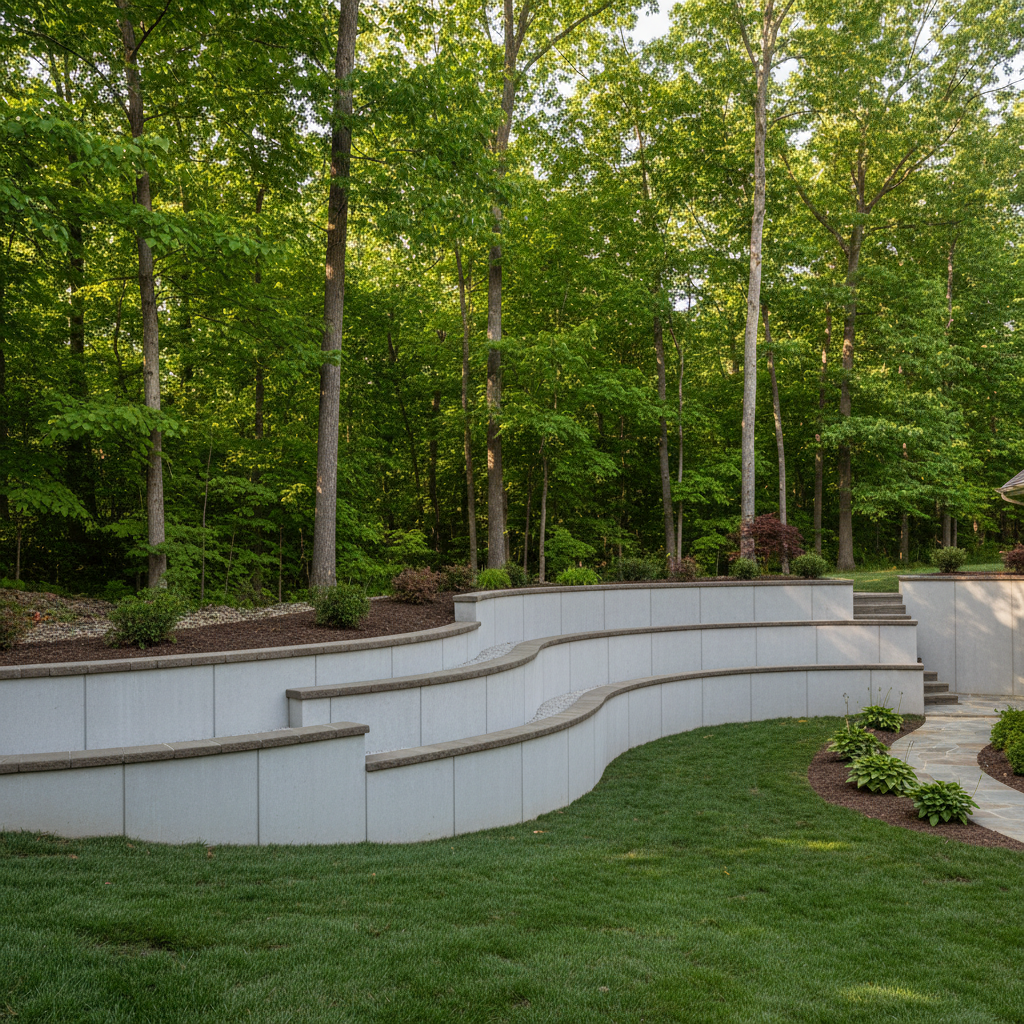
Your concrete retaining wall really earns its keep, especially here in Kingsport. It's constantly pushing back tons of earth, stopping erosion, and often, it just looks good in your yard. But anything that works this hard needs a little TLC to stay in tip-top shape. You want that wall to stick around for decades, right? Here’s how we make sure it does.
Make Your Wall Last Longer: It All Starts with Good Drainage
The biggest enemy of any retaining wall, especially one made of concrete, is water. And I don't just mean rain hitting the front of it. I'm talking about water piling up behind it. That hydrostatic pressure? It's no joke; it can shove even the toughest wall out of line or make it crack. So, the absolute best thing you can do to give your wall a long life is to make sure it drains properly. When we build a wall at Kingsport Concrete LLC Of Bloomingdale RD, we always put in a solid drainage system behind it – usually a perforated pipe (a French drain, you know?) wrapped in filter fabric and surrounded by gravel. But that system needs to stay clear.
You'll want to ensure the ground above your wall slopes away from it, not toward it. If water just sits right at the top of the wall, it's going to seep down behind it. Also, keep an eye on your gutters and downspouts. Don't let them dump water right at the base or top of your retaining wall. Send that water somewhere else, ideally into a storm drain or a spot where it can soak into the ground far away from the wall’s foundation.
Regular Upkeep: Your Wall's Yearly Check-Up
Think of this as your wall’s annual physical. You won't need any fancy tools, just your eyes and maybe a shovel. Do this once a year, perhaps in the spring after all those heavy winter rains and freezes we get around here. It's a great time to catch anything before it turns into a real headache.
- Clear the Drainage Outlets: Find where that drainage pipe behind the wall lets water out. Sometimes it's a small weep hole or a bigger pipe. Just make sure it’s not plugged up with dirt, leaves, or roots. You might need to gently clear it out.
- Clean the Surface: Give the wall a good wash. A pressure washer on a lower setting can work wonders, but be careful not to blast away any mortar or mess up the concrete. Just getting rid of moss, algae, and dirt helps you see the actual surface better.
- Inspect for Cracks: Look closely at the whole wall. Are there any new cracks? Are old ones getting bigger? We'll chat more about what kind of cracks are worrisome in a minute.
- Check the Backfill: Look at the ground right behind the top of the wall. Has it sunk a lot? Are there any sinkholes? This could mean there are problems with the drainage or how the soil was packed behind the wall.
- Trim Vegetation: Keep trees and shrubs a good distance from the wall. Roots can be incredibly strong and can push against or even grow right through concrete over time.
Red Flags: When Your Wall Is Trying to Tell You Something
Most concrete retaining walls are built to last, but they're not indestructible. Here’s what you need to watch out for:
- New or Growing Cracks: Hairline cracks, especially if they're vertical and don't go all the way through, might just be shrinkage cracks and usually aren't a huge deal. But horizontal cracks, stair-step cracks in block walls, or cracks wider than a quarter-inch are big red flags. If you spot a crack and it's getting longer or wider over time, that's definitely a problem.
- Bulging or Leaning: This is a major warning sign. If any part of your wall looks like it's bowing out or leaning forward, that means there’s immense pressure behind it, and the wall is failing. This needs immediate attention.
- Water Seeping Through the Face: If you consistently see water weeping or flowing directly through the concrete face of the wall (not just at the weep holes), it means the drainage system behind the wall isn't working, or maybe wasn't put in right to begin with. This can lead to freeze-thaw damage in the winter, especially with our Kingsport winters where we get plenty of freezing and thawing cycles.
- Efflorescence: This is that white, powdery stuff on the concrete surface. It’s mineral salts left behind when water evaporates from inside the concrete. A little bit isn't usually a huge deal, but a lot of it, especially if it's new or concentrated in one area, can point to too much moisture moving through the wall.
- Separation at Joints: If you have a segmented block wall, look for blocks that are shifting out of alignment or gaps appearing between them.
When to Call a Professional
Look, you're not expected to be a structural engineer. If you see any of those major warning signs – bulging, leaning, significant new cracks, or ongoing water issues – don't wait. Call a professional concrete contractor like us. We've got the experience to figure out the problem correctly and suggest the right fix. Sometimes it’s a simple repair; other times, it might involve rebuilding a section or improving the drainage system. Ignoring these signs will only lead to bigger, more expensive problems down the road, and nobody wants a collapsed retaining wall in their backyard.
Taking a little time each year to check on your retaining wall can save you a lot of headaches and money. It's an investment in your property, and with just a bit of care, it'll stand strong for years to come.